What St Andrew’s is
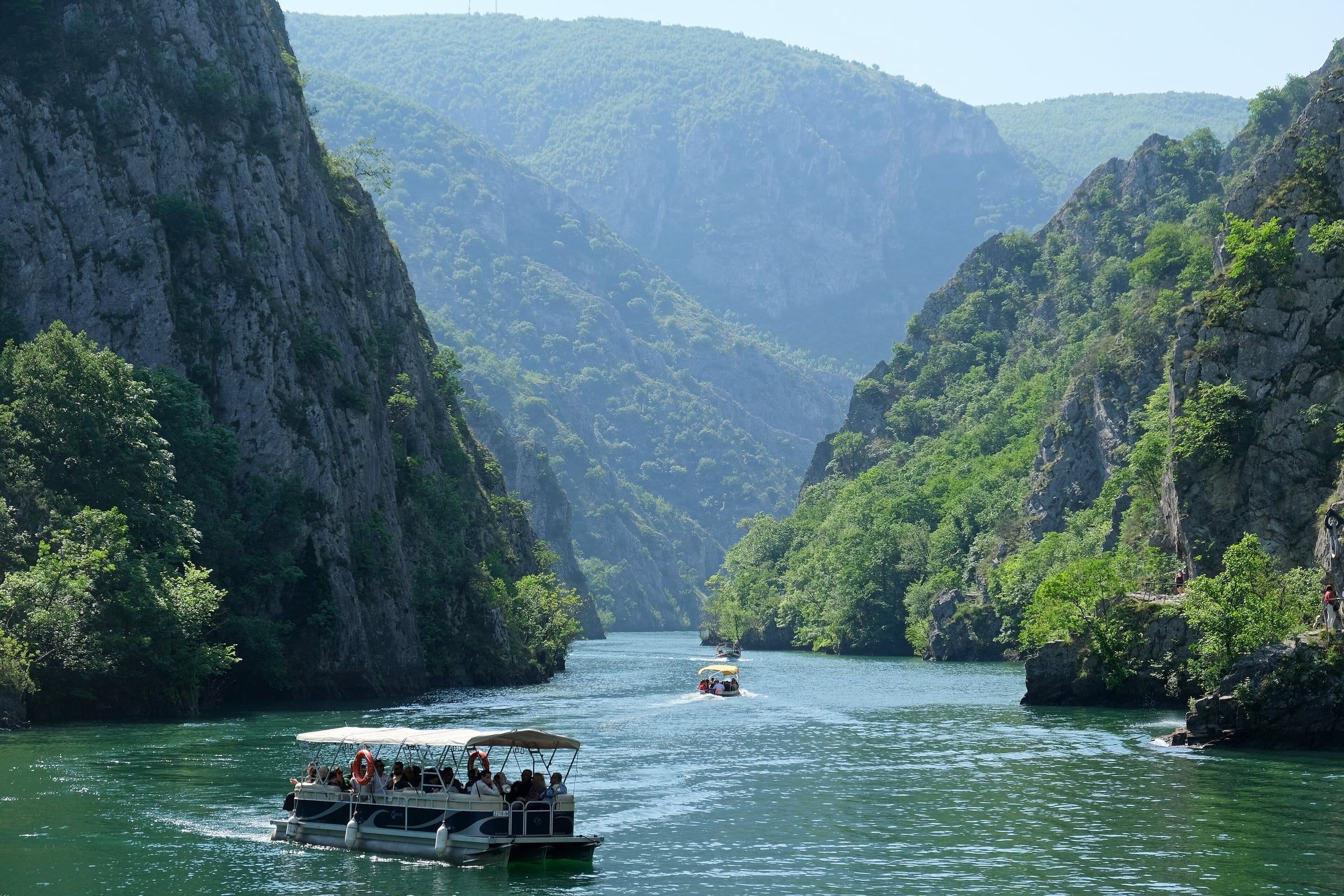
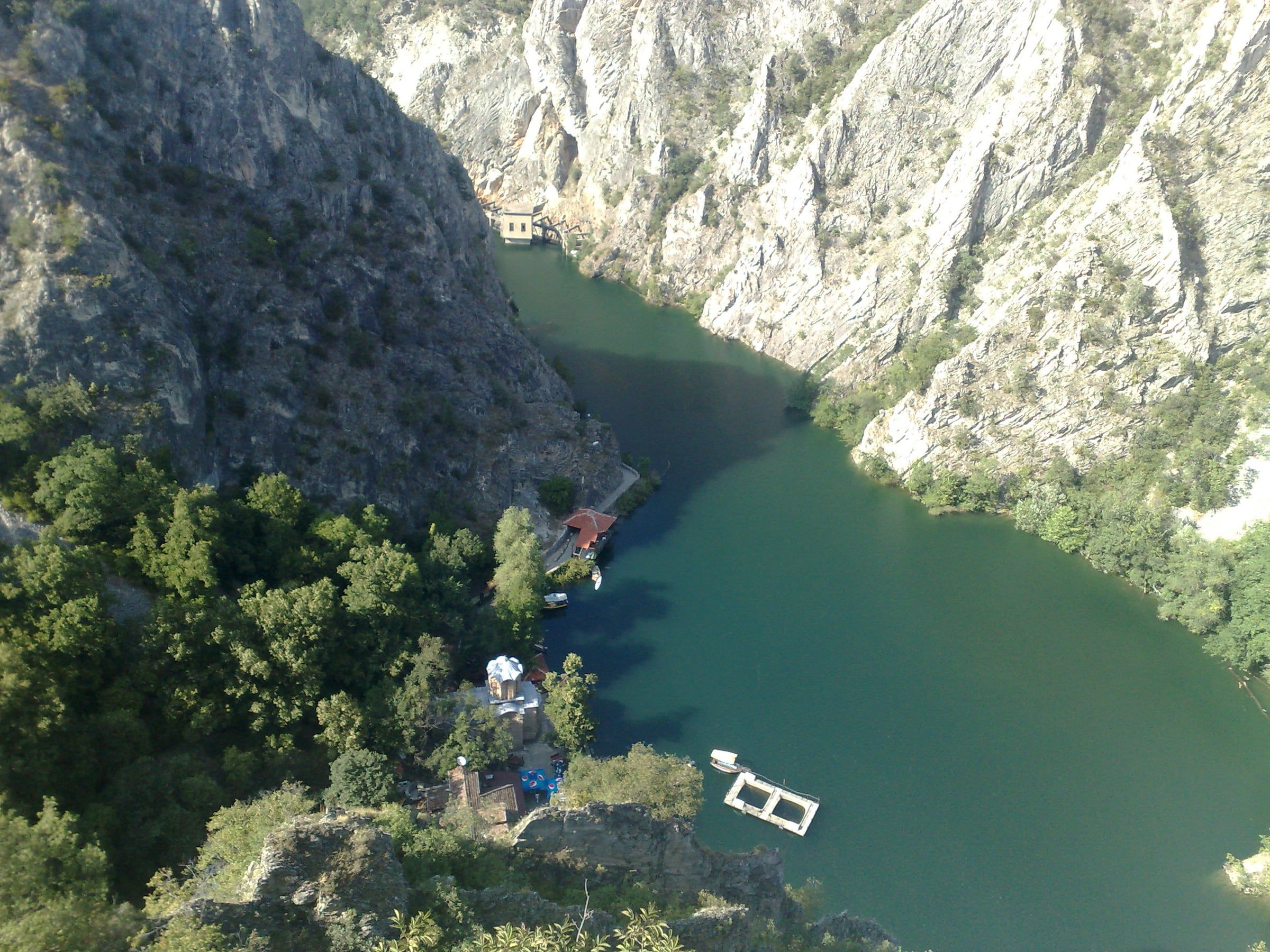
St Andrew’s (Sveti Andrea in Macedonian) is a small medieval church at the lower end of Matka Canyon. It stands beside the Treska river just before the dam, on a ledge among steep cliffs. A tourism listing names the Macedonian Orthodox Church as its custodian.
It is the church most visitors reach, because a short, flat lakeside path leads to it from the dam. Walking there costs nothing. Our Matka Canyon overview shows how it fits into a half day.
History and date
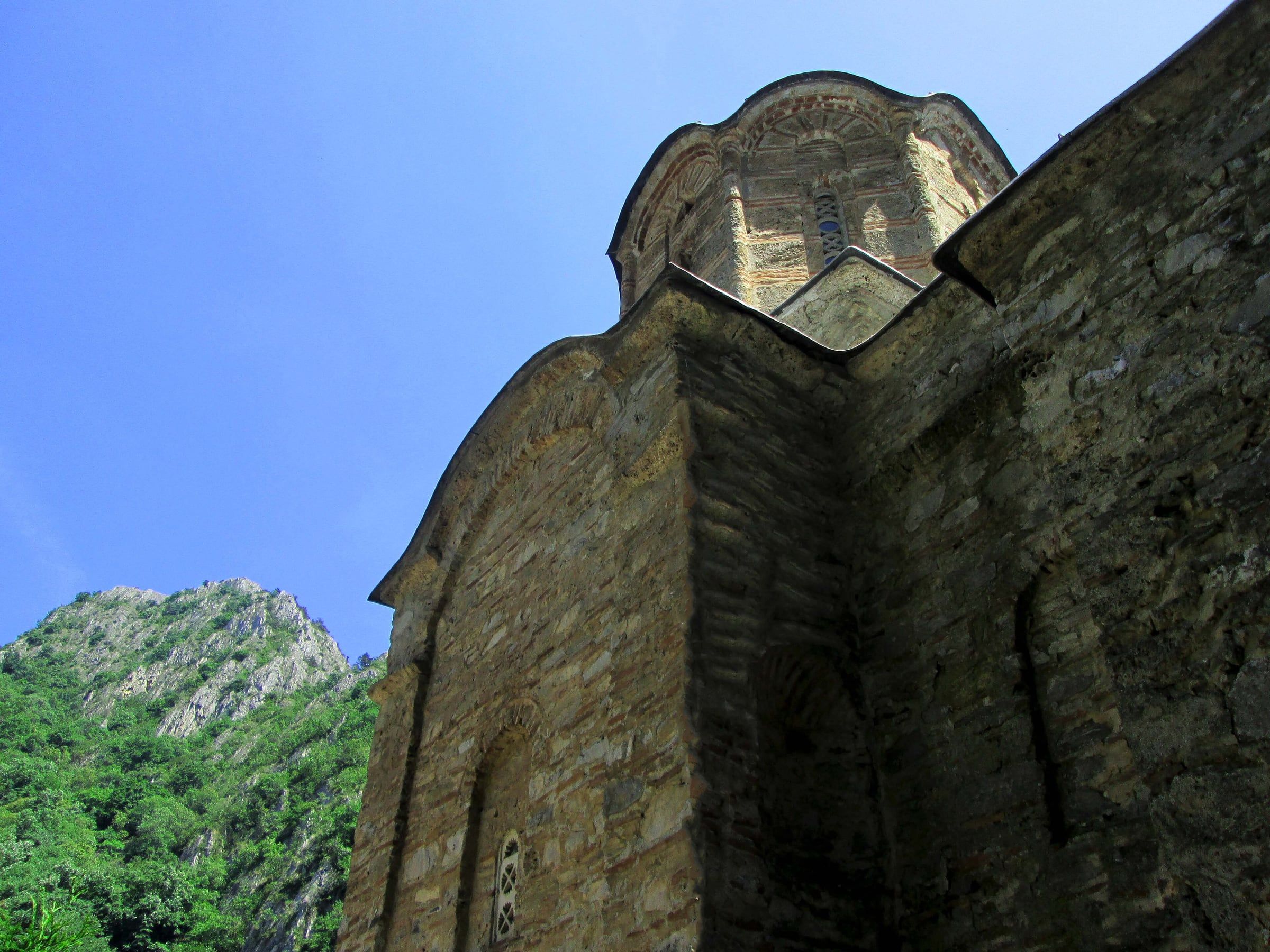
The church was founded in 1389 by Andrijaš, also called Andrew, a son of King Vukašin. Wikipedia’s article on the canyon gives around 1388 and calls him a brother of Prince Marko, so expect to see both years. Most of the inscriptions made when it was built and painted survive, according to Wikipedia’s article on the church.
The plan is a cross, with three rounded lobes inside. The eastern lobe holds the altar and the northern and southern lobes serve as choirs. Two rows of small arched niches run round the outside walls. A porch was added in the middle of the 16th century.
The frescoes
Wikipedia describes the paintings in three bands. At the bottom are the archangels Michael and Gabriel, saints Demetrius and George, the Virgin and the apostles. The middle band shows scenes from the life of Christ, above all the Passion. In the drum of the dome are Christ and the apostles.
Metropolitan Jovan led the work. The sources name different helpers, among them a deacon or monk called Grigorije, and Wikipedia adds a monk named Makarij. Jovan is also credited with frescoes in a monastery at Prilep. Travel2macedonia says the team broke with Byzantine habit by painting full-length warrior saints with lifelike faces. Wikipedia singles out the Prayer on the Mount of Olives for its use of perspective.
Condition is a question mark. Macedonia Guidebook says only fragments of 14th and 15th century frescoes survive inside, while Wikipedia describes a full scheme. Third Eye Traveller found the church locked and saw none of it. Go for the setting, and be glad if the door is open.
Where it is and how to get there
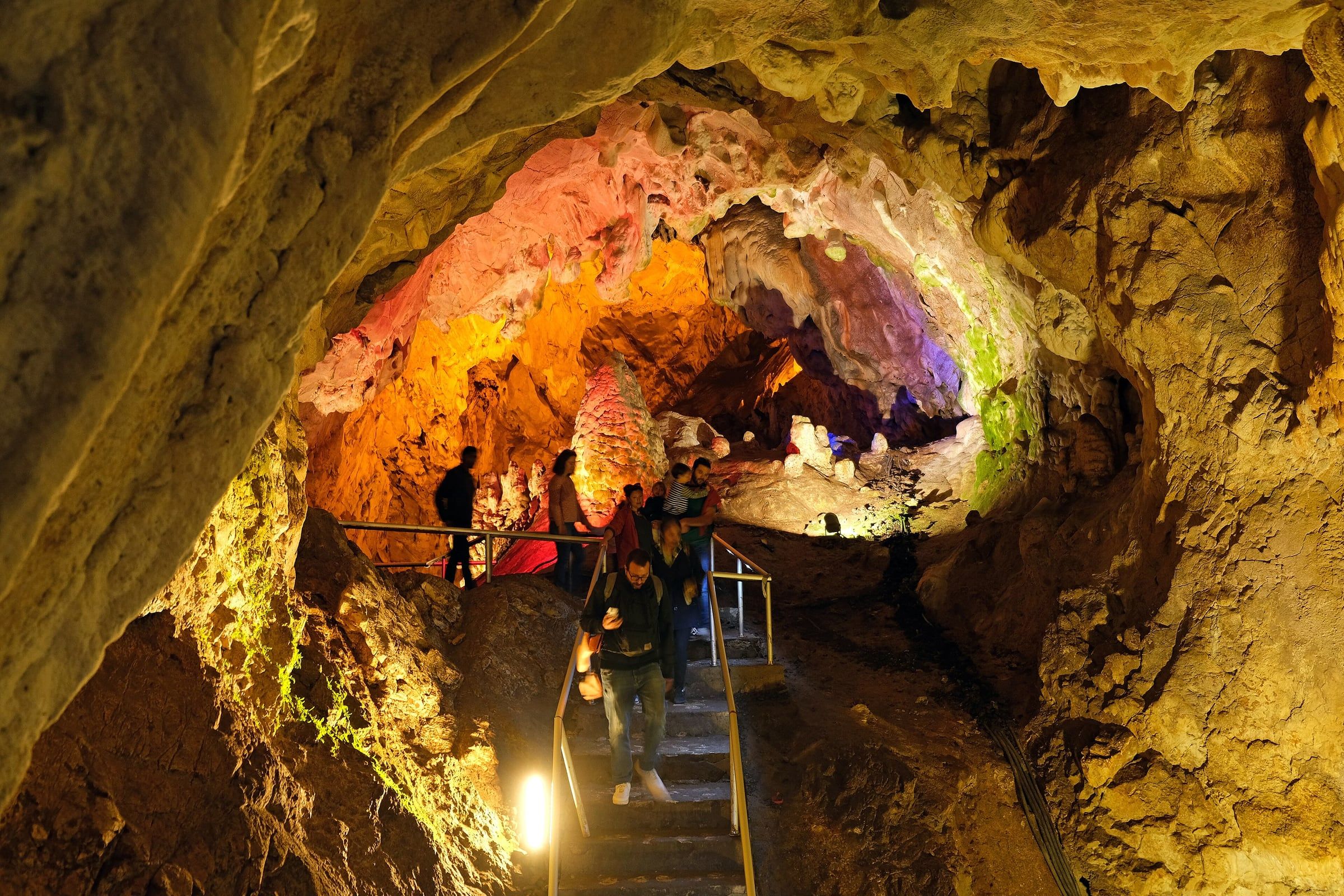
The church is close to the dam and to the restaurant and hotel beside the lake. Third Eye Traveller describes walking from the car park past the dam and along a tunnel path to the lake. Macedonia Guidebook calls it a short, flat walk along the lakeside path from the dam. The boat dock is nearby, so you can pair the church with a trip to the cave. The boat and kayak page has prices and times.
A tourism listing says the site has access for people with disabilities. The wider canyon is different, with stairs and uneven ground, so check the path before relying on it. For buses, taxis and driving, see getting there from Skopje.
Opening times and etiquette
None of the sources we checked gives opening hours or an entry fee. Third Eye Traveller, updated in July 2026, found the church closed. If seeing the frescoes matters to you, there is no way to confirm access in advance from the pages we found.
Macedonia Guidebook describes it as an active religious site. It asks visitors to dress modestly and keep noise down inside. That is the only etiquette guidance we could verify.
Group half-day tours leave limited time at the canyon, so decide whether the church or the cave boat comes first. The day tours page compares them.
Other monasteries in the canyon
Holy Mother of God (Matka Monastery). This 14th century monastery stands on the left bank of the Treska. An inscription records that in 1497 a woman named Milica found the church roofless and restored it, with new frescoes among the work. The Blog Trotter says nuns still live there.
St Nicholas Šiševski. It perches on a cliff above the canyon and St Andrew’s. Wikipedia says it is first mentioned in the 17th century, with the west side painted in 1630 and the iconostasis in 1645. It was abandoned in the 18th century, found roofless in 1816, and left empty again in 1897. Travel2macedonia puts a church here in the 13th or 14th century, so the date is unsettled. The Blog Trotter says a small boat across the river costs about 50 MKD, followed by a steep climb of about 30 minutes.